Dowth Winter Solstice - 21st December 2011
The winter solstice sunrise is aligned with the passage and chamber at Newgrange and the sunset is aligned with the passage and chamber at Dowth and Slieve Gullion. After the disappointment of a cloudy morning at Newgrange and generally overcast conditions during the day, it was wonderful to get a splash of sunlight approaching sunset at Dowth.
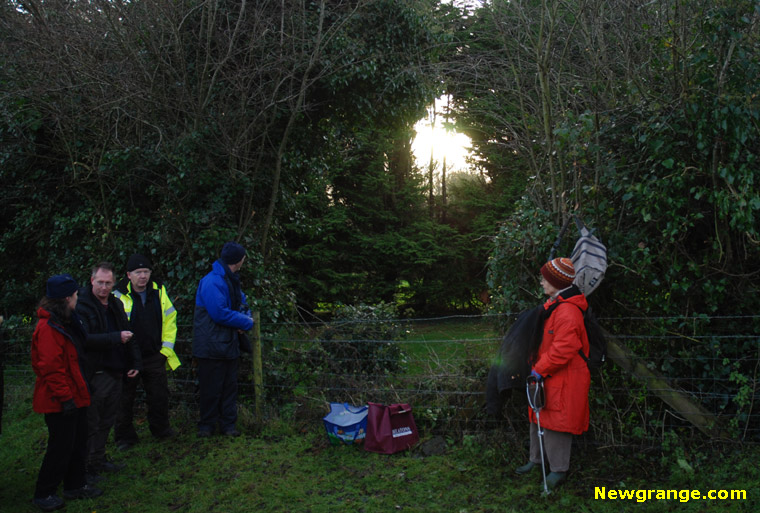 A splash of Winter Solstice sun makes its way through the gap in the trees towards the Dowth chamber.
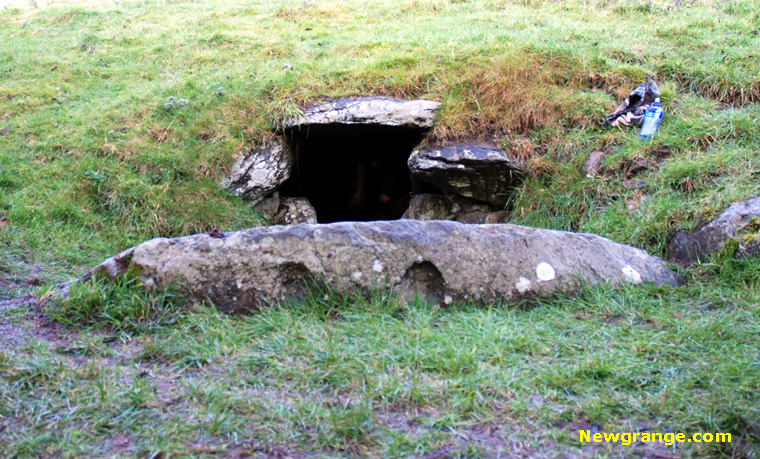 The entrance to Dowth passage and chamber lit up by the setting Winter Solstice sun.
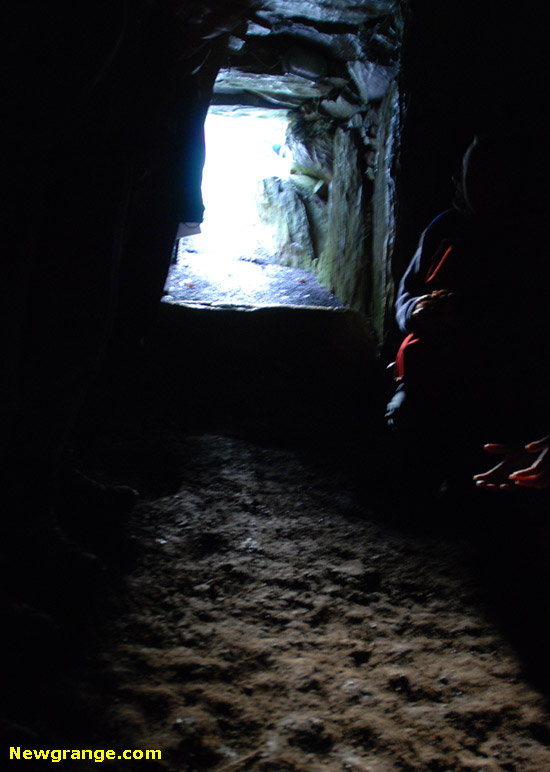 The view from inside the chamber towards the entrance.
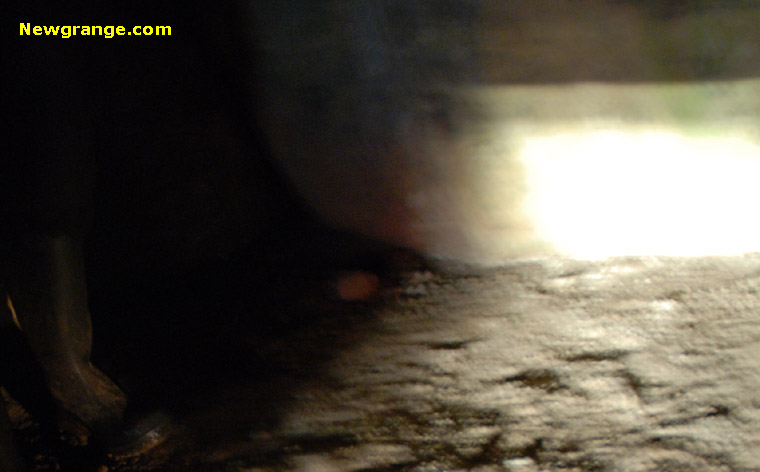 The sunbeam hitting the backstone of the chamber inside the Dowth mound.
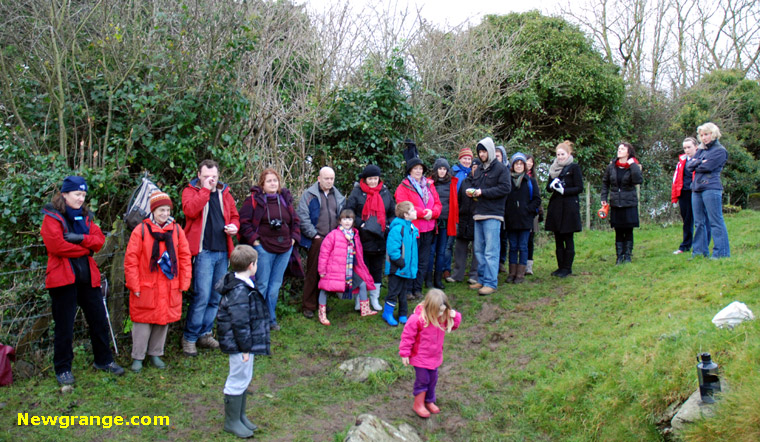 Some of the people who made the pilgrimage to Dowth for the Winter Solstice Sunset.
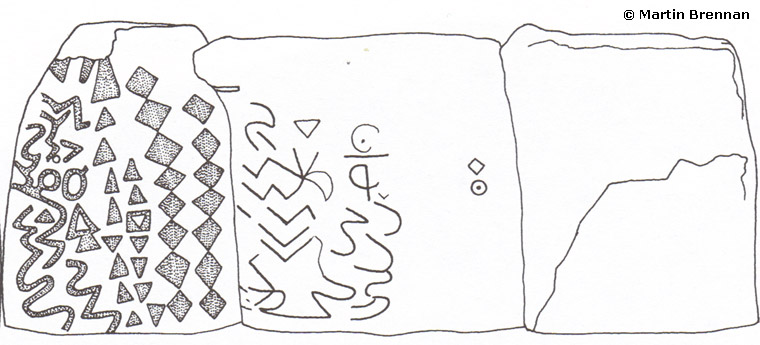 Martin Brennan's drawing of the engravings on the stones at the back of the chamber. It is the lower part of the centre stone that the beam from the winter solstice setting sun illuminates.
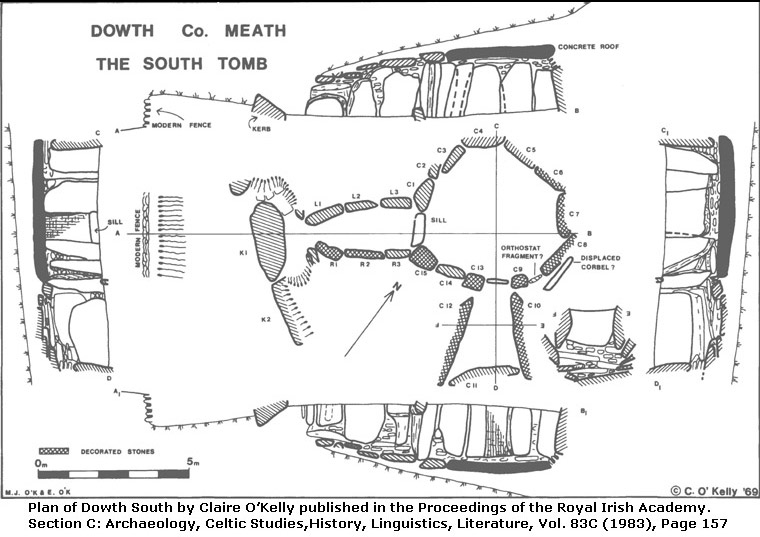 Plan of Dowth South.
Dowth South and the winter solstice sunset
The Dowth mound contains two passage tombs. The southern tomb, about 25 metres from the larger northern chamber, has a short 3-metre passageway opening into a round chamber with a single recess. It is this southern tomb that the setting sun of the winter solstice illuminates. Research by Anne-Marie Moroney, published in Archaeology Ireland in 1999, demonstrated how the low winter sun reaches the chamber at sunset; her photographs helped confirm an astronomical alignment to match the famous sunrise beam at neighbouring Newgrange.
In 2011 the Dowth chambers were not considered secure and were closed to visitors for most of the year, except for the annual opening of the south tomb for the winter solstice sunset, when people gathered on the mound, as on the cloudy morning at Newgrange and the brighter evening shown in the photographs above, to witness the last rays of the setting sun.
About Dowth
The name Dowth (Dubad, "darkness") comes from legend rather than from any lack of light inside the tomb. The great Boyne Valley necropolis includes Newgrange and Knowth on the official Brú na Bóinne tour; Dowth stands apart, and there is no charge to walk the mound, but no guided access to the passages on ordinary days. The monument still dominates the landscape: roughly 15 metres high and 85 metres across, ringed by 115 kerbstones, of which fifteen bear megalithic art, including kerbstone 51, called the "Stone of the Seven Suns" by Martin Brennan.
The southern chamber roof, which had collapsed in antiquity, was replaced with a concrete vault in modern times, a repair noted by archaeologists as less effective at keeping out rainwater than the original Neolithic corbelled roofs at Newgrange and Knowth. Much of the mound was damaged by nineteenth-century excavation, yet Dowth remains one of Ireland's great passage tombs and a key piece of the Brú na Bóinne World Heritage landscape. See also Dowth and Dowth: Where Darkness, Stone and Memory Meet.