Newgrange Kerbstone K3
It is one of the 97 kerbstones numbered in Professor Michael J. O'Kelly's record of the monument. Walking clockwise from the entrance stone (K1), K3 is two stones away from the entrance.
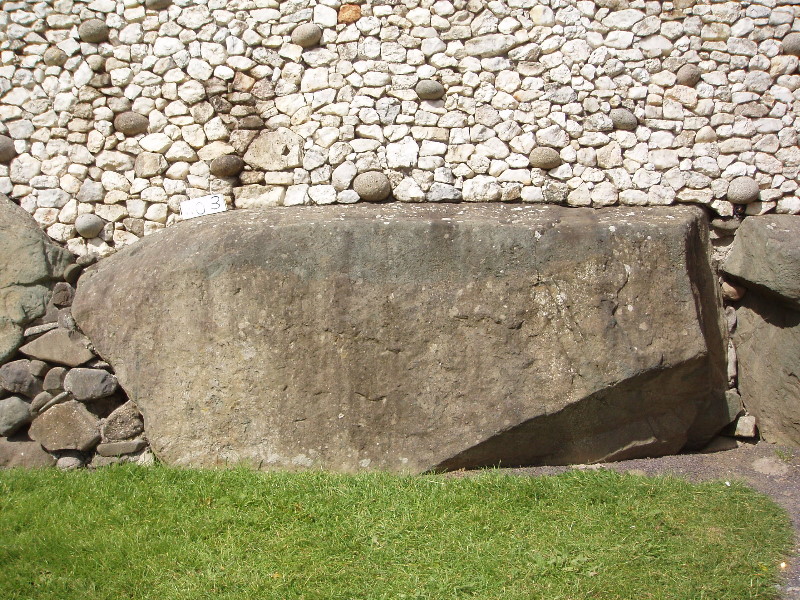 Newgrange Kerbstone K3
During Professor Michael J. O'Kelly's excavations between 1962 and 1975, sectional profiles of the cairn slip were recorded at several points around the kerb, including at K3. The stratification of this material, which had slipped down from the mound over thousands of years, was crucial evidence for reconstructing the original shape of the cairn and the quartz and granite façade in front of the entrance.
Megalithic art on Kerbstone K3 is recorded in Claire O'Kelly's corpus, illustrated in Michael J. O'Kelly's Newgrange: Archaeology, Art and Legend (Part 5).
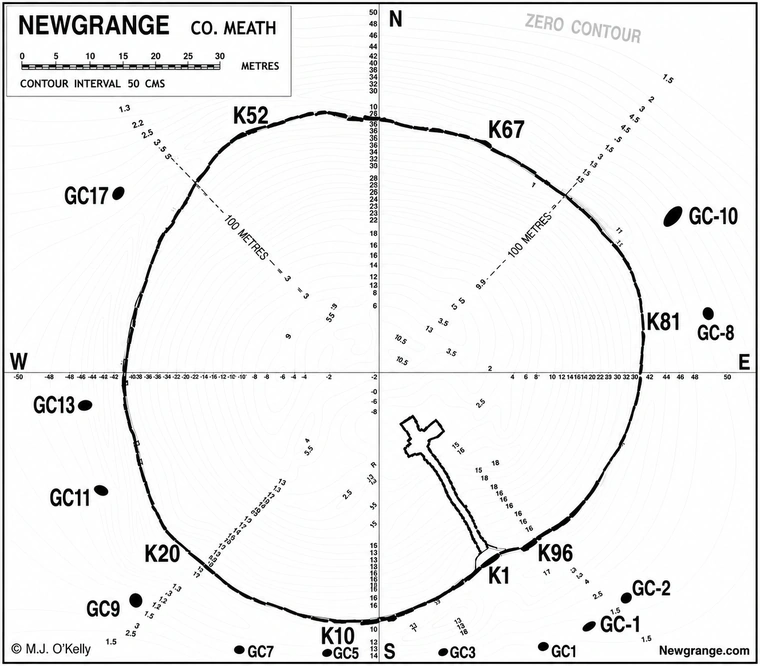 Plan of Newgrange Mound adapted from Newgrange - Archaeology, Art and Legend
Newgrange – Archaeology, Art and Legend
 Newgrange – Archaeology, Art and Legend
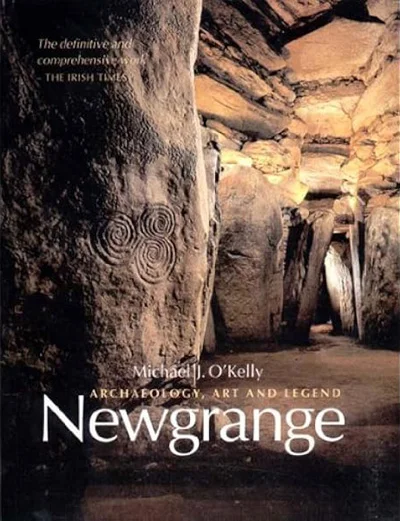
by Professor Michael J. O'Kelly and Claire O'Kelly is the definitive archaeological study of Newgrange and one of the most important books ever published on an Irish prehistoric monument.
Newgrange – Archaeology, Art and Legend
by Professor Michael J. O'Kelly and Claire O'Kelly is the definitive archaeological study of Newgrange and one of the most important books ever published on an Irish prehistoric monument.
Based on Professor Michael J. O'Kelly's excavations between 1962 and 1975, the book explains the construction, chronology, megalithic art and winter solstice alignment of Newgrange. O'Kelly also describes the excavation, interpretation and restoration of the great passage tomb using detailed archaeological records and architectural analysis.
Richly illustrated throughout, the volume includes the important contribution of Claire O'Kelly, who collaborated closely in the excavation and recording of the site from its earliest seasons.
First published in 1982, with a paperback edition in 1988, the book remains an essential reference for anyone interested in the archaeology, megalithic art and wider significance of Newgrange and the Boyne Valley.
Purchase at Amazon.com or Amazon.co.uk
Newgrange | Brú na Bóinne
Newgrange is one of Europe's most important prehistoric monuments. Located in the heart of the Boyne Valley, it forms part of the Brú na Bóinne archaeological landscape, one of the finest surviving Neolithic complexes in the world. Built around 3200 BC, Newgrange is a great circular passage tomb consisting of a stone-lined passage leading to a cruciform chamber beneath a mound over 80 metres in diameter. It is older than both Stonehenge and the Egyptian pyramids at Giza.
Newgrange is internationally renowned for its winter solstice alignment. On mornings around the shortest day of the year, the rising sun shines through the specially constructed roof-box above the entrance and sends a narrow beam of light along the 19-metre passage to illuminate the inner chamber. This remarkable event demonstrates the astronomical knowledge and engineering skill of the monument's Neolithic builders.
Brú na Bóinne includes Newgrange, Knowth and Dowth, together with dozens of smaller monuments dating from the Neolithic and later periods. In 1993, the area was inscribed as a UNESCO World Heritage Site in recognition of its outstanding archaeological significance and its exceptional concentration of prehistoric monuments.
Encircling the base of Newgrange is a ring of 97 massive kerbstones, many of which are decorated with megalithic art. These carvings include spirals, lozenges, arcs, zigzags and other geometric motifs carved more than 5,000 years ago. The decorated kerbstones of Newgrange and nearby Knowth represent one of the richest collections of prehistoric stone art in Atlantic Europe and continue to be studied for the insights they provide into Neolithic symbolism, craftsmanship and belief.